


Advanced solutions for complex maritime scenarios
MAG INTERNATIONAL develops and deploys proprietary technological systems designed to enhance securety efficiency and emergency response across the maritime and defense sectors.
From seaports and ships to critical coastal infrastructure, our technologies are engineered to operate in real-time, support high-stakes decisions, and reduce risk through automation, data fusion, and procedural intelligence.
Our solutions are the result of operational experience, engineering precision, and a deep understanding of maritime threat environments.
They are patented, scalable, and adaptable to a wide range of applications — from surveillance and emergency management to asset protection and tactical support.
EMS – Emergency Management System
MAG International owns an innovative technological system known as EMS– Emergency Management System, designed to manage the safety and security of ports, airports, ships, and critical infrastructure. The system has been granted an industrial invention patent by the Italian Ministry of Economic Development, patent no. 102016000048724, classification G06Q.

How EMS Works
The EMS provides effective support to the operator in managing the efficiency of security resources and emergency situations.
EMS operates in two modes:
- Consultation Mode
- Alarm Mode
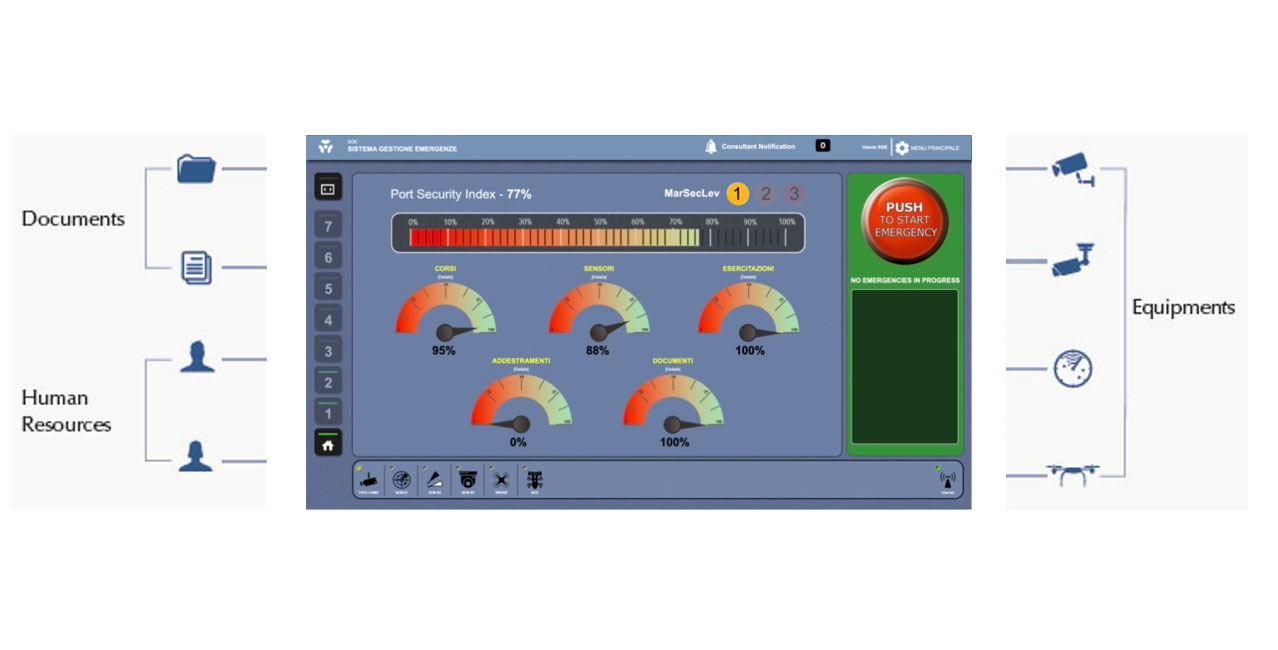
Consultation Mode
In Consultation Mode, the system provides the operator with real-time indicators, both general and specific, on the efficiency status of the facilities or assets it monitors.
This efficiency index is generated through data fusion, based on the status of available resources (human, technological, and documental).
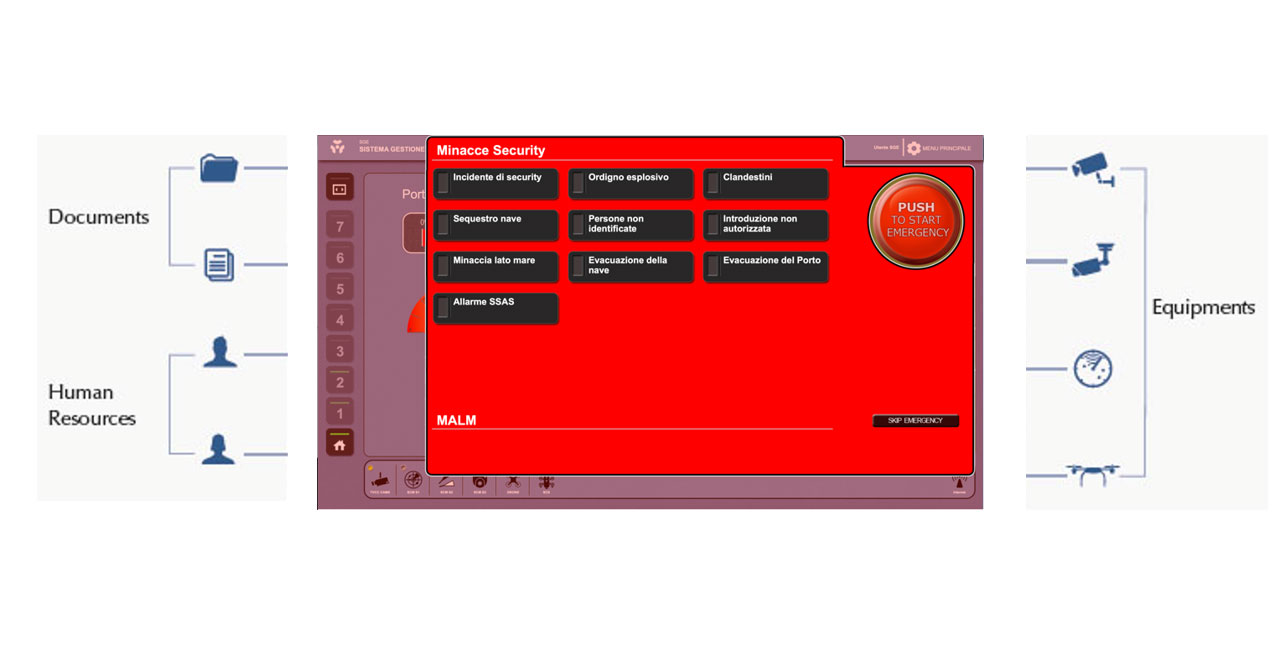
Alarm Mode
In Alarm Mode, the system alerts the operator in real time about threats to safety or physical integrity that are currently occurring.
Once the emergency is confirmed, the operator is guided to follow pre-defined response procedures, which are displayed directly within the interface.